Getting Started on Energy Management and Solar
September 16, 2015
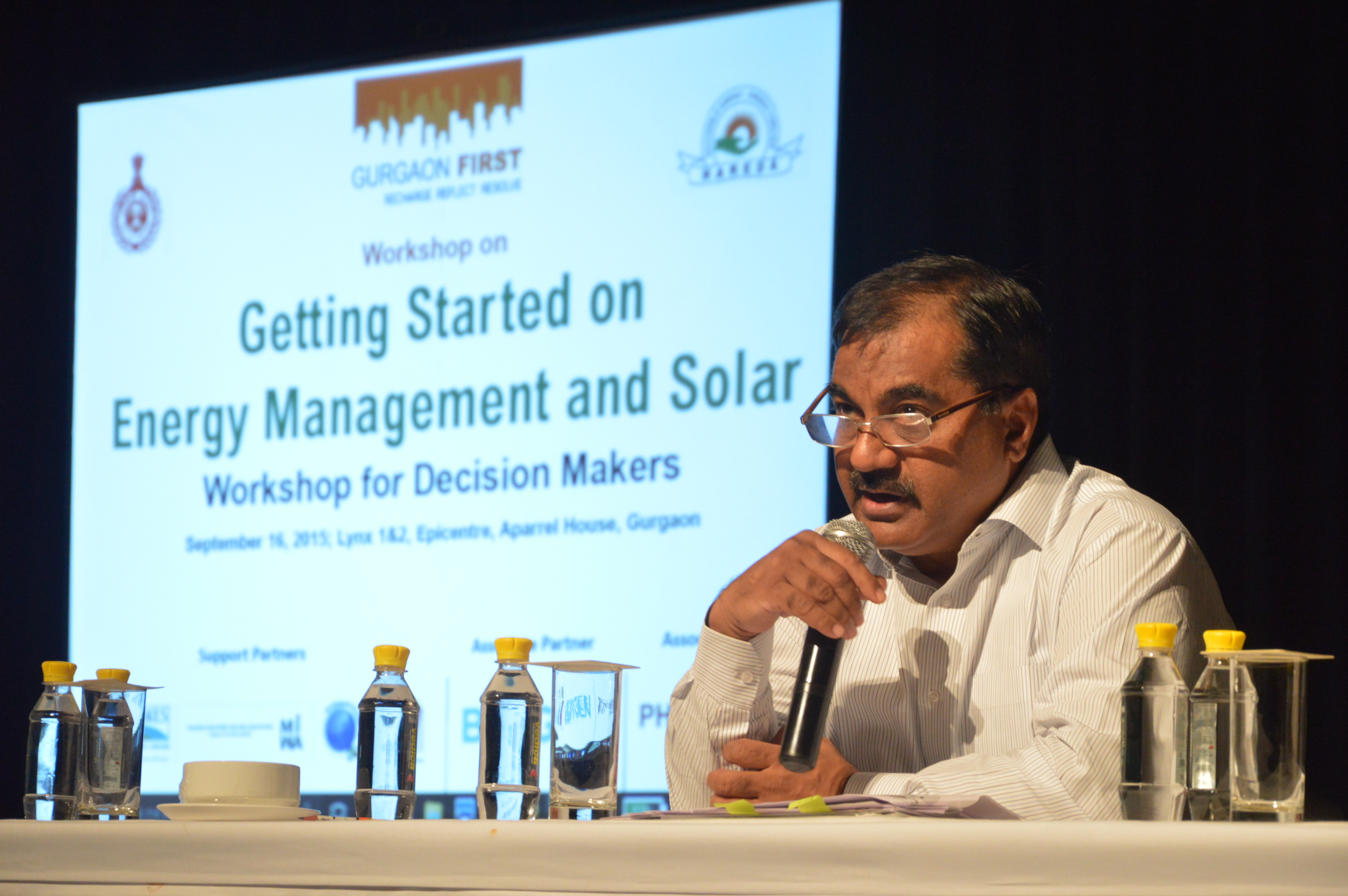
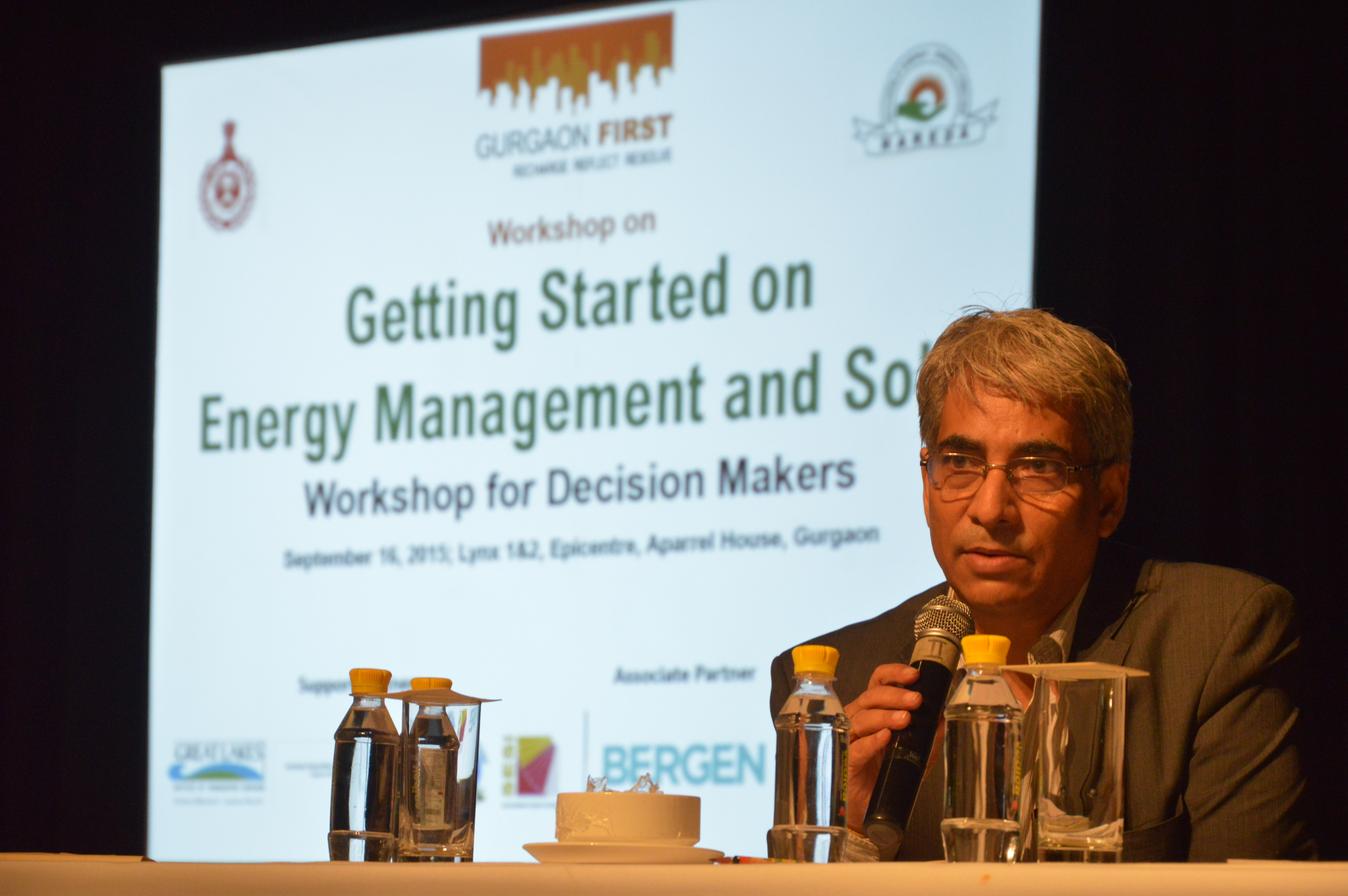
A workshop titled “Getting Started on Energy Management and Solar” was organised by Gurgaon First in
support with Haryana Renewable Development Agency (HAREDA) at Epicentre on September 16, 2015. More
than 120 delegates including solar consultants, solar EPC companies, green architects, school and
institutions administration heads, as well as over several RWAs participated in the Meet.
The workshop was organised to boost adoption of solar workshop in the city of Gurgaon, just before
the end of the deadline of September 31, 2015 by which time through a state government order
buildings of 500 square yards and above had to switch a certain percentage of their energy need to
solar. The workshop helped in updating delegates about the latest policy guidelines of the state
government, as well as clarifying on subsidy issues about solar.
Speaking on the occasion, Vinay Pratap Singh, Additional Deputy Commissioner, Gurgaon who is also the
nodal officer of HAREDA said, “The local administration is focused on bringing energy management
focus in the city and coordinating the efforts of HAREDA and DHBVNL to benefit residents,
institutions and industry of Gurgaon”. He talked about the need of quality solar consultants to
build capacity for conducting DPRs. He informed about signing of an MoU of the local administration
with “National Institute of Solar Energy” in Gurgaon and “Gurgaon First” to collaborate on providing
training and consultancy in the field of solar. He also talked about opening a single window “solar
fecilitation centre” at the Rajiv Gandhi Renewable Park near Leisure Valley in Gurgaon.Balwant
Singh, Chief Engineer, DHBVNL informed that the net metering policy has been clarified by the state
regulator and the utility will soon come out with specifications for dual-meters, which could deal
with both conventional energy and solar energy. With this, consumers could feed surplus energy into
the grid and be compensated for it in their energy bills.
OD Sharma, Project Director Hareda informed the delegates about the energy conservation policies of
the state government. He said that HAREDA had received about 100 proposals from all across the state
for subsidy. However, he reiterated that solar energy should be installed given the merit of it and
not depending on subsidy support which will be made available to only educational institutions/NGOs
and not commercial establishments.Delegates expressed desire that both HAREDA and DHBVNL would build
their capacities to achieve their objectives for solarisation of the city and the state. Mr Rajendra
Kaura, Vice-President, Solar Energy Society of India said, “The cell and module industry should come
up in a big way in Haryana. This will contribute to the employment and socio economic upliftment of
the state. Engineering colleges should take up solar generation on rooftops. Besides, farmers in
Haryana villages could have solar rooftops on their storage facilities and make additional
revenues,” he said.
Gallery