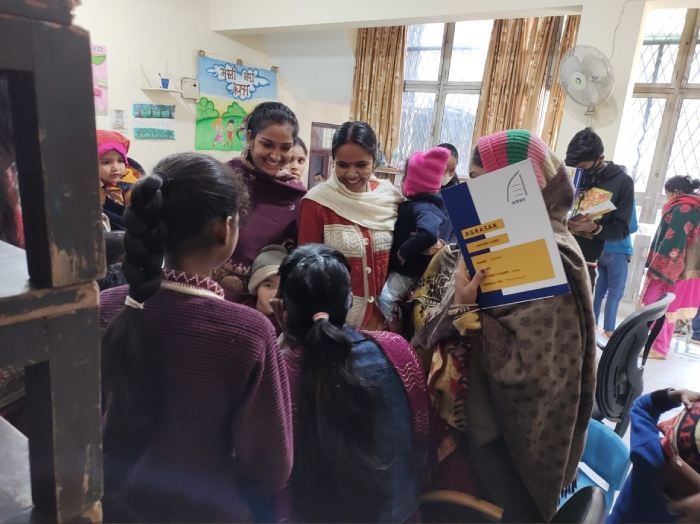
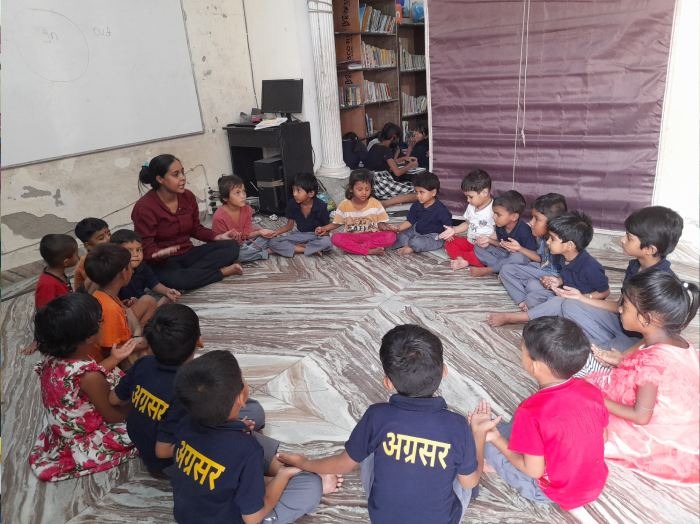
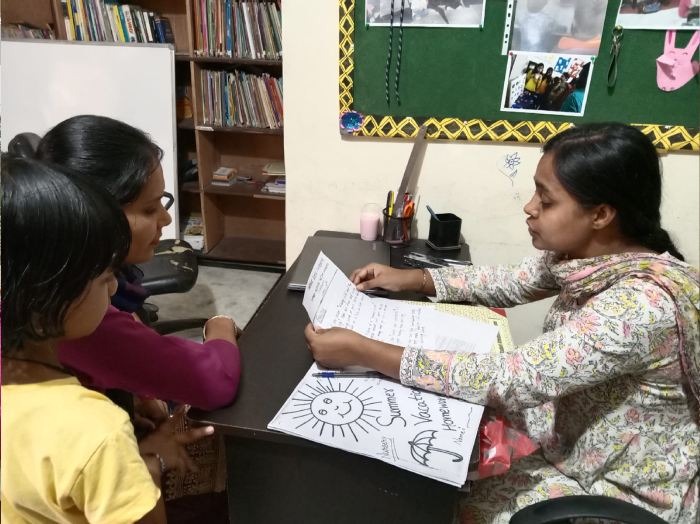
Agrasar is an organization dedicated to working with disadvantaged communities, particularly focusing on promoting equitable access to education, safe schooling, employability, and livelihood opportunities. Its mission revolves around the sustainable socio-economic development of marginalized communities by assisting them in capacity building and realizing their full potential. A key aspect of Agrasar’s mission is to advocate for the rights of children from disadvantaged backgrounds. They aim to achieve this by eliminating corporal punishment and enhancing the overall social security of families within these communities.
Agrasar is an organization dedicated to working with disadvantaged communities, particularly focusing on promoting equitable access to education, safe schooling, employability, and livelihood opportunities. Its mission revolves around the sustainable socio-economic development of marginalized communities by assisting them in capacity building and realizing their full potential. A key aspect of Agrasar’s mission is to advocate for the rights of children from disadvantaged backgrounds. They aim to achieve this by eliminating corporal punishment and enhancing the overall social security of families within these communities.
Based in Gurugram, Agrasar’s operations extend to nearby regions, either directly or through partnerships with other social purpose organizations. The organization is governed by a board of trustees consisting of approximately ten members. Additionally, Agrasar collaborates with two funding partners and two other partners to support its initiatives and projects. Overall, Agrasar’s work focuses on empowering marginalized communities, particularly children, through education, skill development, and social support, with the ultimate goal of fostering sustainable development and social equity.
- Changing social norms to recognize violence against children.
- Empowering students, teachers, and parents to address issues together, fostering better relationships, discipline, and education.
- Strengthening government responses using NCPCR and Right to Education mechanisms.
- Advancing knowledge on corporal punishment, especially for migrant workers.
- Collaborating with government schools and enhancing School Management Committees (SMCs).
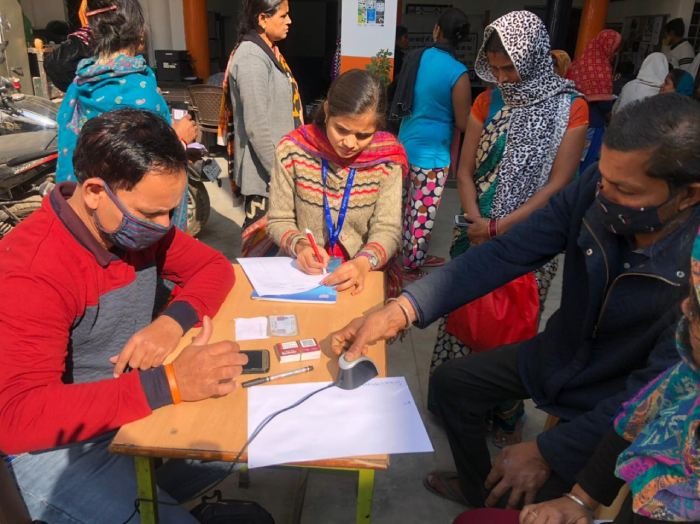
- Establishing Worker’s Facilitation Centers to assist in obtaining identity documents, accessing government welfare schemes, and promoting financial inclusion.
- Operating a helpline, ‘Labour Line’ (1800 833 9020), to address worker issues, provide legal aid, and mediate for better work conditions in the informal sector.
- Impact over 30,000 migrant workers annually through 6 centers, facilitating access to social security schemes and enhancing their capacities in collaboration with stakeholders.
- Our efforts to eliminate corporal punishment involve systemic change anchored on child participation, working with stakeholders for behavioral, structural, and cultural shifts.
- launched India’s first helpline (18001212120) for addressing cases of corporal punishment.
- Established a Corporal Punishment Monitoring Cell (CPMC) in a Delhi government school and partnered with Teach for India to eradicate corporal punishment.
- Educated 2500 out-of-school children and enrolled 700 in formal education.
- Over 1500 children in 2 Gurgaon government schools received life skills education, and 100 schools’ quality of education was enhanced.
- Formed 14 collectives of 623 women home-based workers, training 24 leaders on rights and entitlements, and educated over 100 Agrasar Saathis to assist migrant workers and their families.
- Prerit Rana – CEO and Co-founder
- Sakshi Sharma – Lead, Quality